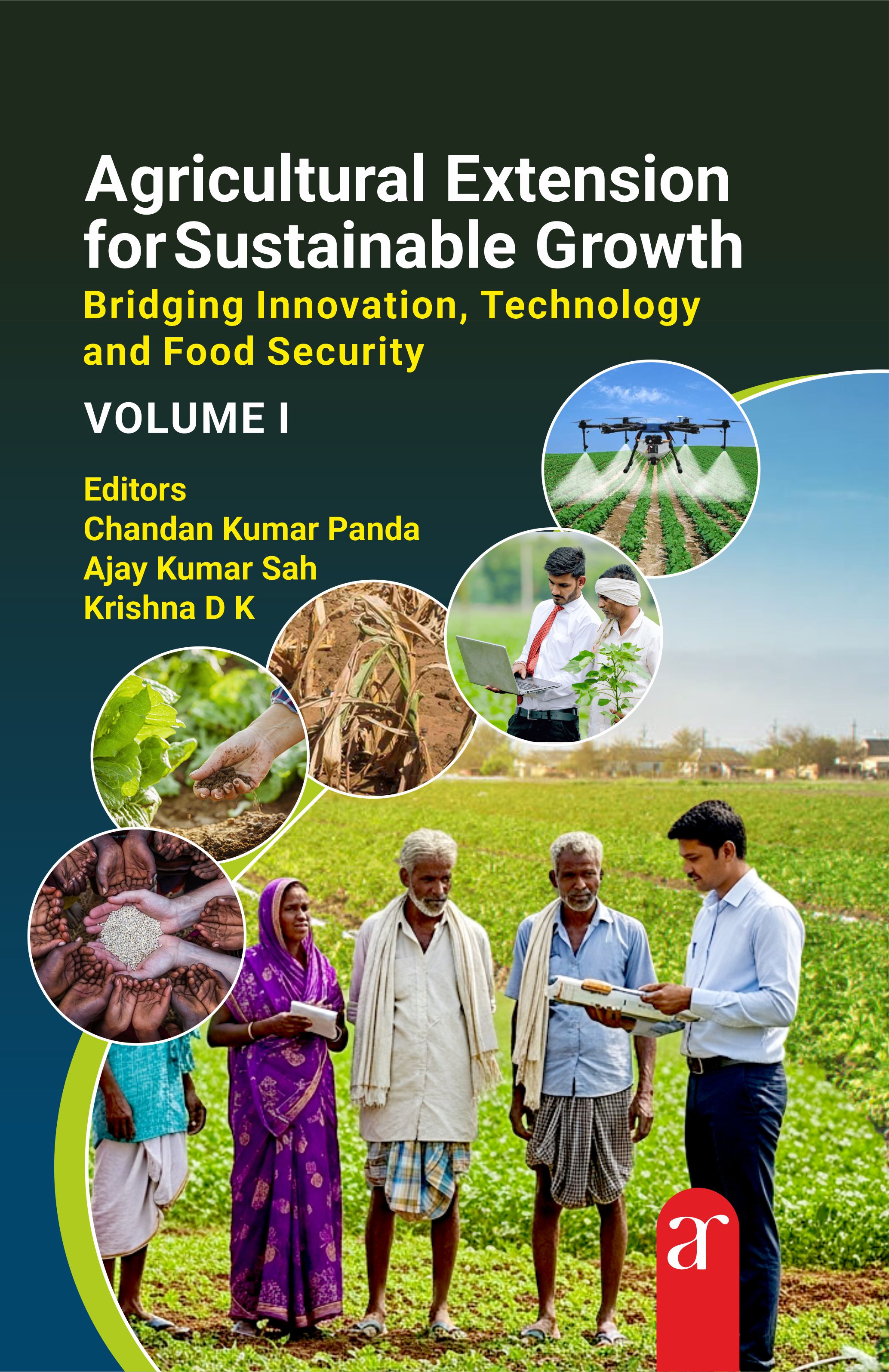
Agricultural Extension For Sustainable Growth: Bridging Innovation, Technology And Food Security (volume 2)
Ebook
ISBN: 9789349045842
Chapter: Chapter 4: Mushroom: An Excellent Source Of Food And Farmer Income
Chapter No.: 4Contributors:
Mushroom, is a super food suitable for all age groups, containing all the vital nutrients required by the human body in the desired proportions. Mushroom production in India has increased at an average growth rate of 8.3% in the last 25 years. On the one hand, emphasis is being laid on increasing the production of crops per unit area to supply food to the increasing population of the world. Besides this, more protein rich foods are being for searched and mushroom is one of them. Mushrooms have been used as a food item in India since ancient times, mention of which can be seen in ancient Indian texts. Although agriculture began around 10,000 years ago, mushroom cultivation is a comparatively recent development, gaining global momentum primarily over the past century due to ongoing innovations and expanding uses. Historical records suggest that the Chinese were among the earliest to grow tropical and subtropical mushrooms under controlled conditions centuries ago. However, large-scale commercial production is believed to have originated in Europe, where button mushrooms were cultivated in caves during the 16th and 17th centuries. Mushroom is gaining a special identity due to its nutritional value. Mushrooms also have their own importance from the nutritional point of view that have 33 percent high quality protein is found in mushrooms. Apart from protein, various vitamins and mineral salts are found in abundance in mushrooms. Mushrooms are the reproductive structures produced by certain fungi, a lower group of organisms distinct from typical plants. Unlike green plants, fungi lack chlorophyll and possess simple, undifferentiated bodies, apart from their spore-producing organs. These spore-bearing structures, commonly referred to as mushrooms, are typically fleshy in nature. Compared to traditional crops, mushrooms offer significantly higher productivity. Beyond their culinary, nutritional, and medicinal benefits, mushroom cultivation also serves as an effective method for managing agricultural waste, since it can use the wastes as medium of growth and thus mushroom cultivation is considered as eco-friendly. Hence, the cultivation of mushroom is an effective way for resource-poor farmers to generate wealth from waste and limited space in a short period of time. Mushrooms are a highly tradable commodity which provides an opportunity to improve socio-economic status.
Keywords: Mushroom, Protein, Fruiting bodies, Button mushrooms, income generation
List of All Chapters
1 - Chapter 1: Nutrition Smart Agricult...
2 - Chapter 2: Crafting Extension Strat...
3 - Chapter 3: Agricultural Extension S...
4 - Chapter 4: Mushroom: An Excellent S...
5 - Chapter 5: Community Based Approach...
6 - Chapter 6: Strengthening Food Secur...
7 - Chapter 7: Food Security And Nutrit...
8 - Chapter 8: Food Security And Nutrit...
9 - Chapter 9: Role Of Good Agriculture...
10 - Chapter 10: Strengthening Agricultu...
11 - Chapter 11: Fostering Sustainable A...
12 - Chapter 12: Role Of Traditional Med...
13 - Chapter 13: Exploring The Opportuni...
14 - Chapter 14: Impact Of Climate Chang...
15 - Chapter 15: Climate Change And Indi...
16 - Chapter 16: Agricultural Extension ...
17 - Chapter 17: Innovative Extension Sy...
Book Details
Agricultural Extension For Sustainable Growth: Bridging Innovation, Technology And Food Security (volume 2) NEW
REFERENCE BOOK
0
0
0
AMERICAN ROYAL (6X9)
350 Gms
All Rights Reserved
M/s AGROBIOS RESEARCH
PG STUDENTS | SCIENTISTS AND RESEARCHERS |
Books with Same Authors
Books with Similar Subjects