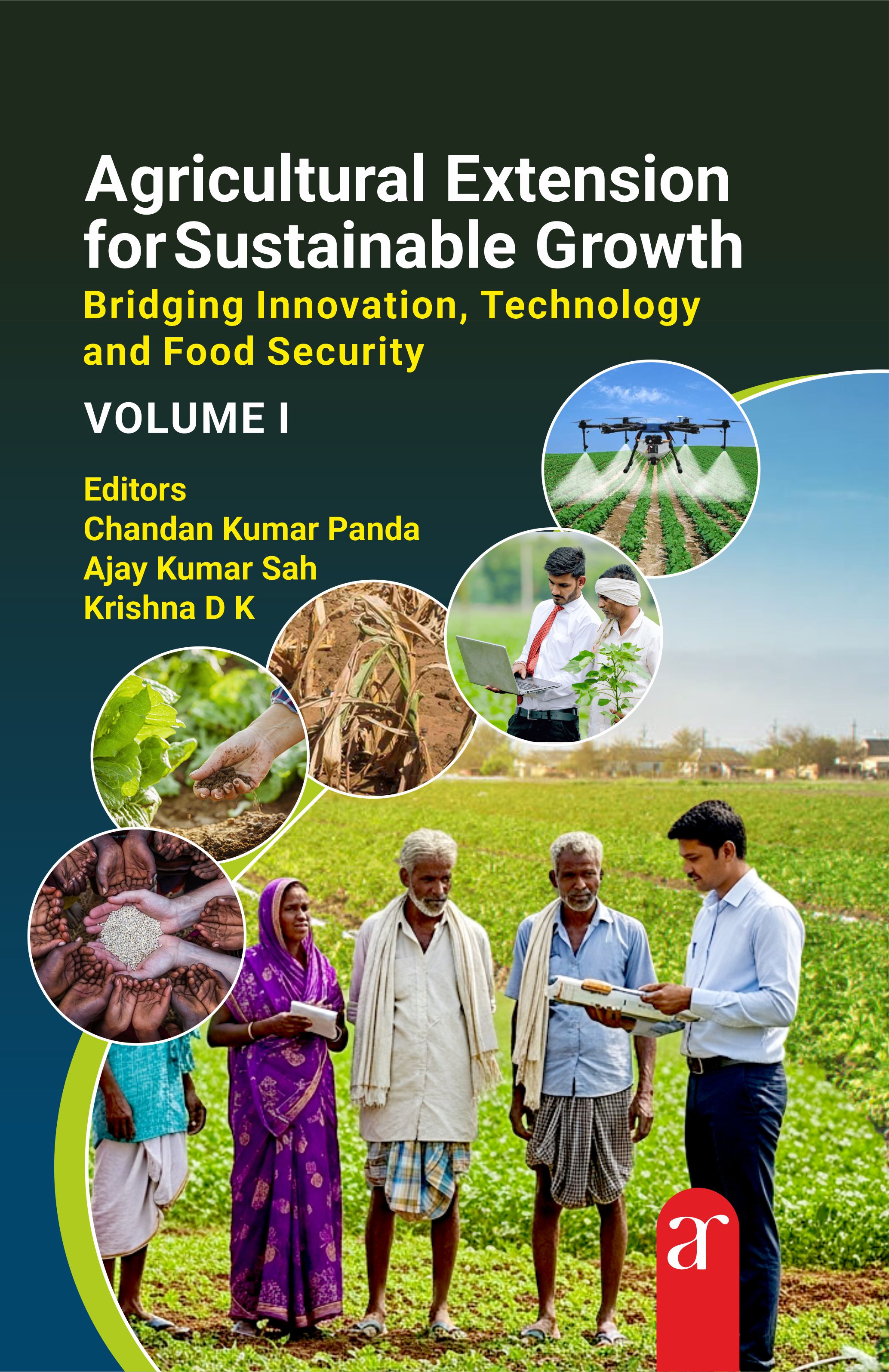
Agricultural Extension For Sustainable Growth: Bridging Innovation, Technology And Food Security (volume 2)
Ebook
ISBN: 9789349045842
Chapter: Chapter 16: Agricultural Extension Services: Models And Effectiveness
Chapter No.: 16Contributors:
Farmers necessitate a wide array of information to enhance their agricultural operations. This information encompasses not only best practices and technologies related to crop production, which were traditionally supplied by the public-sector extension system during the Green Revolution, but also extends to post-harvest considerations such as processing, marketing, storage, and handling, The Agricultural Extension Service seeks to enhance the educational development of individuals within the agricultural sector, with the objective of elevating their standard of living via the distribution of knowledge. This includes the transfer of technologies, techniques, methodologies, concepts, and pertinent information through the extension framework. Agricultural extension services, which include both public and private entities, non-governmental organizations, research and educational institutions, as well as the agricultural producers themselves, represent the primary drivers in the mechanisms of technological dissemination. The implementation of extension services is achieved through the utilization of various extension methods like individual, group and mass contact method. The extension programs in India have evolved from basic farm visits and demonstrations to more sophisticated, participatory approaches that engage farmers in the learning process. The advent of innovations such as Information and Communication Technology (ICT), Geographic Information Systems (GIS), and remote sensing technologies has transformed the operational framework of extension services, providing unparalleled precision and effectiveness in the distribution of agricultural knowledge and practices. The extension system has gradually transitioned towards more decentralized and farmer-centric approaches, as well as market-led extension that highlights the significance of local requirements and with substantially high returns. By continually adapting and integrating new technologies, policies, and educational strategies, training and capacity building of the extension workers these services not only enhance agricultural productivity but also ensure sustainability and resilience against environmental challenges.
Keywords: Extension services, Market led extension, High return, Environmental factors
List of All Chapters
1 - Chapter 1: Nutrition Smart Agricult...
2 - Chapter 2: Crafting Extension Strat...
3 - Chapter 3: Agricultural Extension S...
4 - Chapter 4: Mushroom: An Excellent S...
5 - Chapter 5: Community Based Approach...
6 - Chapter 6: Strengthening Food Secur...
7 - Chapter 7: Food Security And Nutrit...
8 - Chapter 8: Food Security And Nutrit...
9 - Chapter 9: Role Of Good Agriculture...
10 - Chapter 10: Strengthening Agricultu...
11 - Chapter 11: Fostering Sustainable A...
12 - Chapter 12: Role Of Traditional Med...
13 - Chapter 13: Exploring The Opportuni...
14 - Chapter 14: Impact Of Climate Chang...
15 - Chapter 15: Climate Change And Indi...
16 - Chapter 16: Agricultural Extension ...
17 - Chapter 17: Innovative Extension Sy...
Book Details
Agricultural Extension For Sustainable Growth: Bridging Innovation, Technology And Food Security (volume 2) NEW
REFERENCE BOOK
0
0
0
AMERICAN ROYAL (6X9)
350 Gms
All Rights Reserved
M/s AGROBIOS RESEARCH
PG STUDENTS | SCIENTISTS AND RESEARCHERS |
Books with Same Authors
Books with Similar Subjects