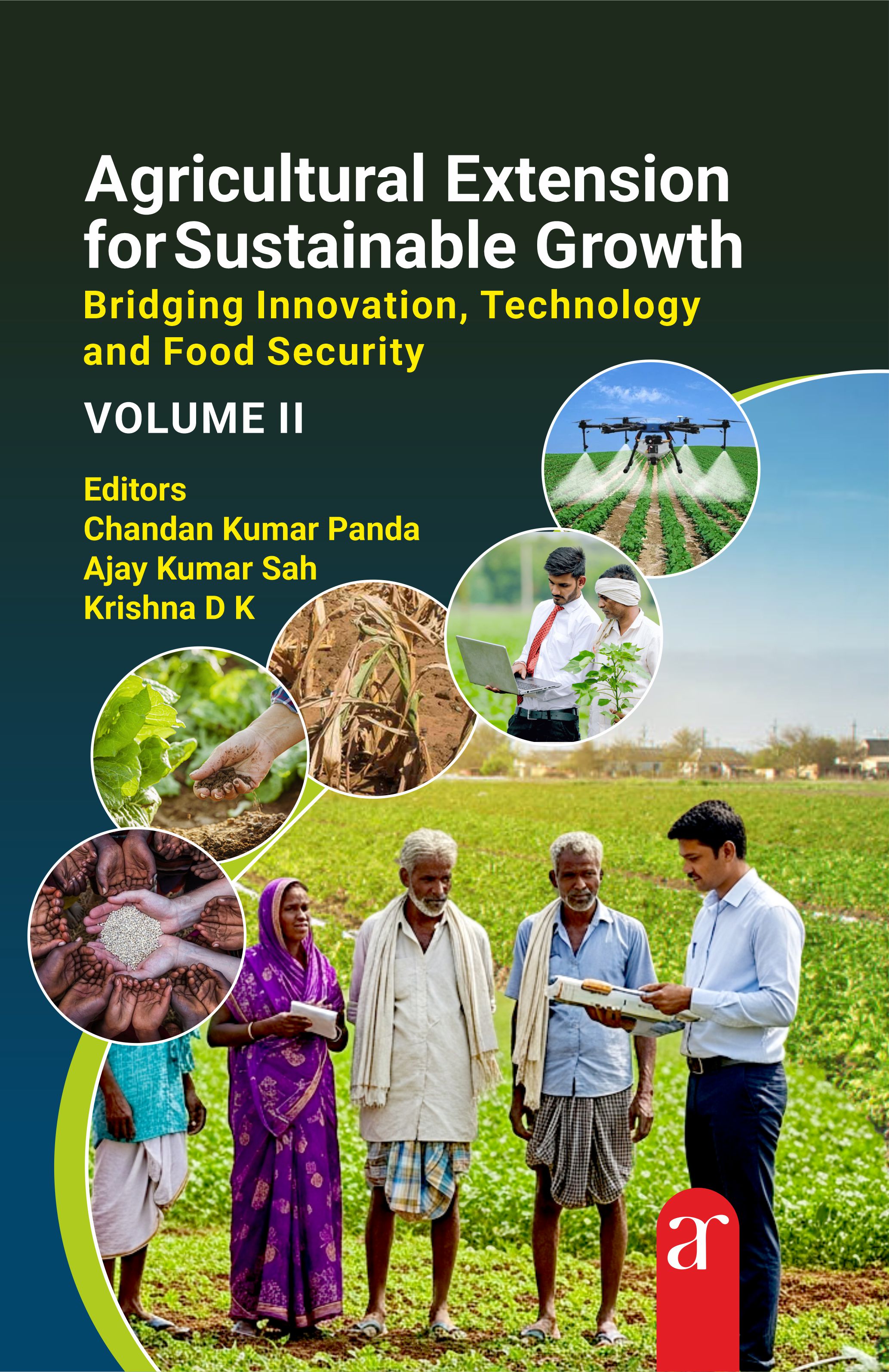
Agricultural Extension For Sustainable Growth: Bridging Innovation, Technology And Food Security (volume 1)
Ebook
ISBN: 9789349045750
Chapter: Chapter 5: Connecting The Farm To The Future: Ict And The Revolution Of Rural Extension
Chapter No.: 5Contributors:
Conventional rural extension services are severely handicapped in efficiently spreading agricultural knowledge and timely assistance to farmers, especially in the far-flung and backward regions. The emergence of Information and Communication Technologies (ICTs) holds a revolutionizing potential to break these constraints and bring agricultural extension into the modern era. This chapter discusses the ICTs’ potential to transform rural extension services through improved access to information, communication facilitation, precision agriculture capability, increased e-learning potential, and enhanced market linkages. Major topics for discussion are mobile phone utilization, internet utilization, and digital platform utilization for the provision of agricultural information, promotion of farmer-to-farmer and farmer-to-expert interactions, and provision of access to market information in real-time and weather forecasts. The chapter also discusses the contribution of ICTs to facilitating precision agriculture by the application of sensors, drones, and remote sensing technologies for enhanced crop management and use of resources. In addition, the chapter discusses the ability of online learning platforms, mobile apps, and virtual training programs to improve the skills and knowledge of farmers and extension agents.
The chapter recognizes the difficulties of ICT adoption in rural areas, including the digital divide, narrow internet penetration, infrastructure limitations, data security issues, and the necessity for sufficient capacity building. It highlights the significance of meeting these challenges through strategic rural ICT infrastructure investments, the creation of easy-to-use and culturally suitable ICT tools, and the support for the digital literacy of farmers and extension agents. Through the deployment of the strength of ICTs, rural extension services can be redesigned as better, smarter, and fairer systems that enrich farmers with the information and resources needed to improve productivity in agriculture, livelihoods, and inclusive agricultural development.
Keywords: Rural extension, Digital divide, Precision agriculture, E-learning, Market linkages, Capacity building, Sustainable agriculture, Digital literacy.
List of All Chapters
1 - Chapter 1: The Role Of Information ...
2 - Chapter 2: Blockchain Technology In...
3 - Chapter 3: Use Of Drones And Remote...
4 - Chapter 4: Social Media As A Tool F...
5 - Chapter 5: Connecting The Farm To T...
6 - Chapter 6: Blockchain Technology In...
7 - Chapter 7: Revolutionizing Agricult...
8 - Chapter 8: Agri-tech And Public Pri...
9 - Chapter 9: Iot In Smart Farming And...
10 - Chapter 10: Understanding Cyber Agr...
11 - Chapter 11: Investing In Women: Unl...
12 - Chapter 12: Rural Women’s Role In...
13 - Chapter 13: Rural Women’s Role In...
14 - Chapter 14: Cultivating The Future:...
15 - Chapter 15: Capacity Building In Ag...
16 - Chapter 16: Livelihood Opportunitie...
Book Details
Agricultural Extension For Sustainable Growth: Bridging Innovation, Technology And Food Security (volume 1) NEW
REFERENCE BOOK
0
0
0
AMERICAN ROYAL (6X9)
350 Gms
All Rights REserved
M/s AGROBIOS RESEARCH
PG STUDENTS | SCIENTISTS AND RESEARCHERS |
Books with Same Authors
Books with Similar Subjects